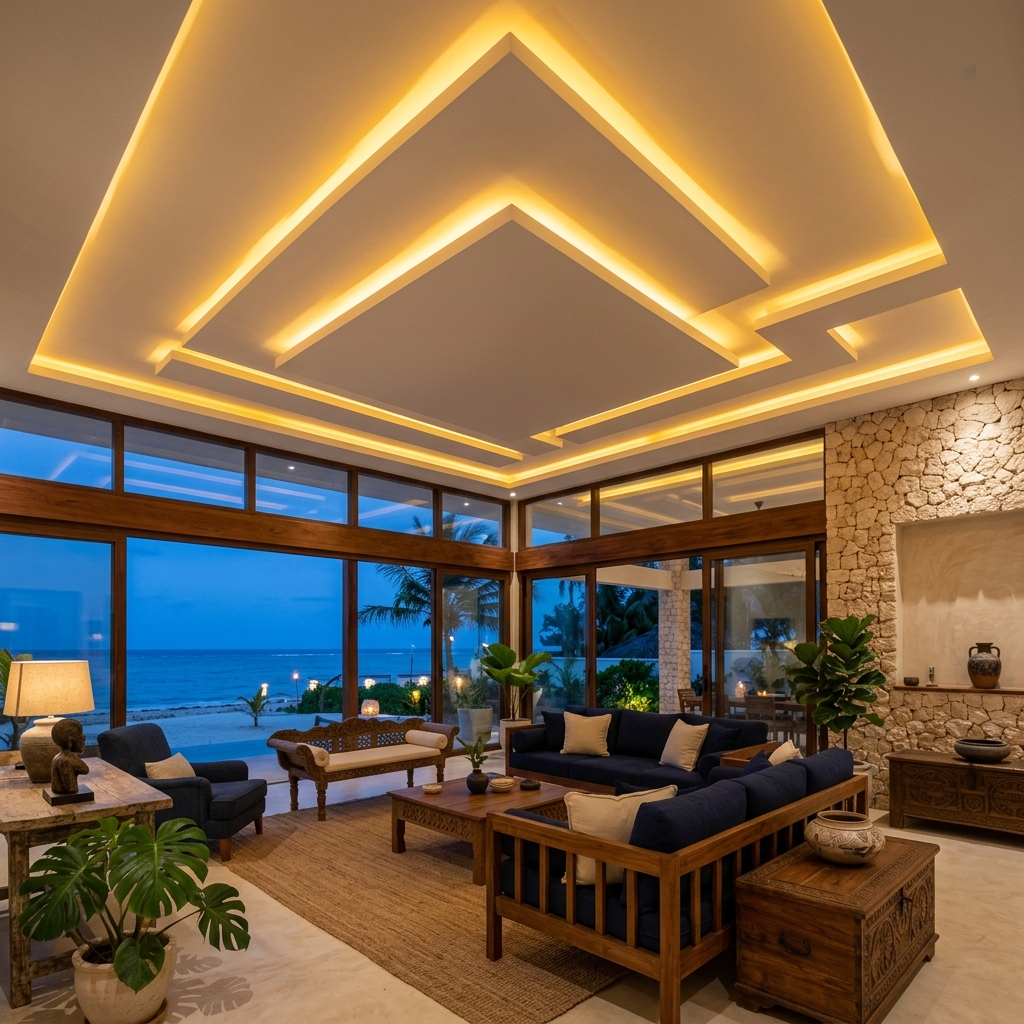
There's a moment that happens in almost every completed gypsum installation. The client walks in, the lights come on, and they go quiet. Not because nothing happened — but because everything happened. The room they've lived in for years suddenly feels like somewhere else entirely. Somewhere better.
That moment is what modern gypsum design is really about. Not the material itself, but the transformation it creates. If you've been curious about what gypsum is, why it's spreading rapidly across homes and hospitality spaces along the Kenyan coast, and what it could do for your own space — this is your complete, honest guide.
So, What Exactly Is Gypsum?
Gypsum is a naturally occurring mineral — calcium sulphate dihydrate, for those who like the science — that has been used in construction for thousands of years. Ancient Egyptians used it in the pyramids. It's in the walls of most modern buildings you've ever been inside.
In modern interior design, gypsum is processed into lightweight boards and plaster compounds that can be shaped, cut, layered, and finished with extraordinary precision. It's fire-resistant, moisture-tolerant when sealed correctly, and — crucially — it holds its shape without warping the way wood sometimes does in humid coastal climates like Lamu's.
What makes modern gypsum design distinct from traditional use is the integration of architectural detail and lighting. Today's gypsum installations aren't just flat ceilings. They're layered, sculpted, illuminated environments.
How Modern Gypsum Actually Changes How a Space Feels
This is where it gets interesting, because the effect of a well-designed gypsum installation isn't just visual — it's psychological. The way a room is finished affects how you feel in it, often without you consciously noticing why.
It Makes Rooms Feel Larger Than They Are
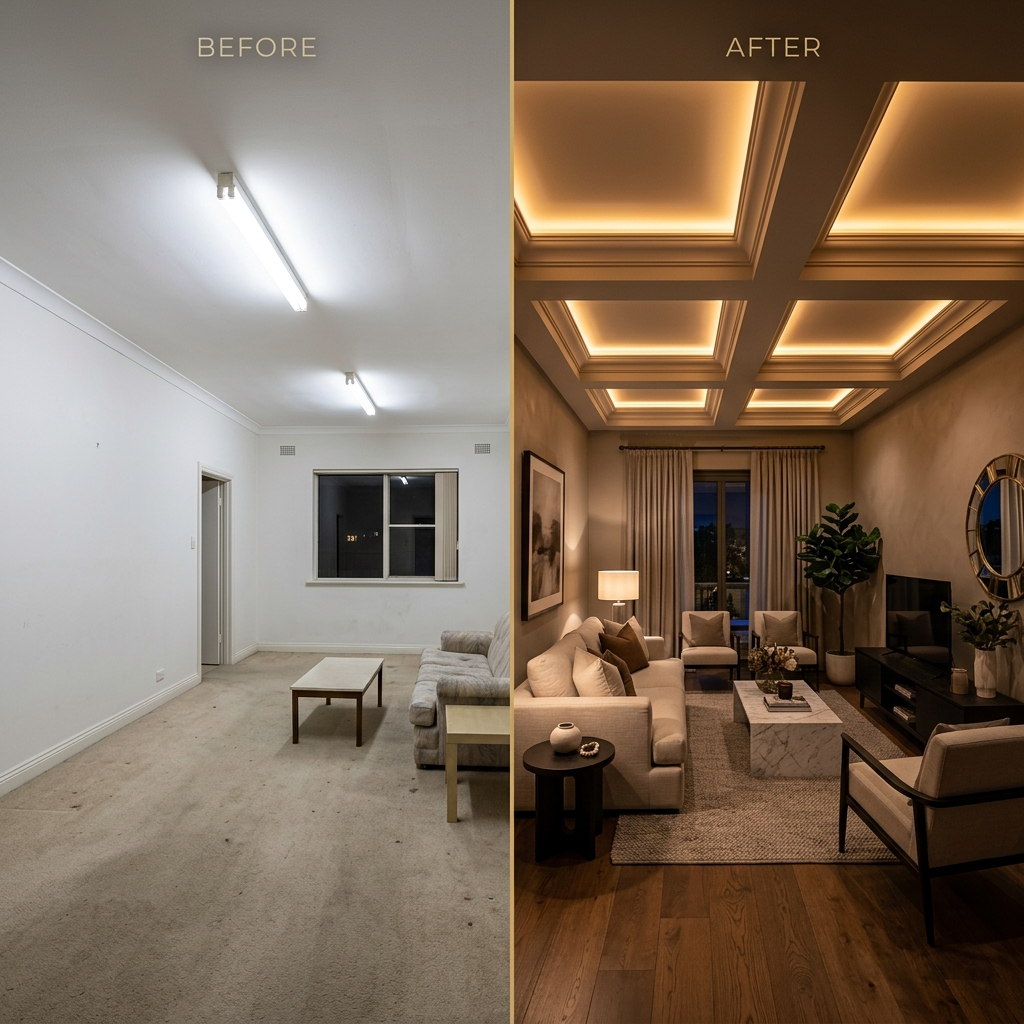
Coffered ceilings — where gypsum panels create recessed frames across the ceiling — draw the eye upward and create a perception of height even in rooms with standard floor-to-ceiling measurements. Layered ceiling designs with lighting between the tiers add visual depth that stretches the sense of space. It's an optical trick, but a deeply effective one.
It Defines How a Room Is Used
Open-plan layouts are popular, but they come with a challenge: without walls, it can be hard to signal where one space ends and another begins. Suspended gypsum panels with integrated lighting can delineate a dining zone from a lounge, or a study corner from a living area, without erecting a single partition. The architecture does the work that furniture alone can't.
It Controls the Atmosphere — Completely
This is perhaps the most powerful benefit of modern gypsum paired with architectural lighting. Warm LED strips embedded behind white gypsum panels produce a soft, diffused glow that makes a room feel immediately calm and welcoming in the evening. Coloured LED systems — blue, teal, amber — shift the energy of the same room entirely. A bedroom feels like a boutique hotel. An entertainment space feels vibrant and alive.
The difference between a room with overhead fluorescent lighting and the same room with a layered gypsum-and-LED system is not subtle. It is profound. And it is felt by everyone who enters, whether or not they can articulate what changed.
It Creates a Quiet Sense of Luxury
There's a reason high-end hotels, lodges, and restaurants invest heavily in gypsum and architectural lighting. These finishes signal care and intention. They tell a visitor — wordlessly — that this space was designed, not just built. That someone thought about how you would feel here. That sense of being considered is the essence of hospitality, and it lives in the details.
Why Gypsum Makes Particular Sense for Lamu County
The Swahili Coast has its own architectural language — one built over centuries of trade, culture, and climate adaptation. Open courtyards, carved wooden doors, coral stone walls, natural ventilation. It's a design heritage that is genuinely beautiful and deeply rooted in the identity of this place.
Modern gypsum, applied thoughtfully, doesn't compete with that identity. It extends it.
The coastal climate does present specific considerations. Humidity is real, and materials that absorb moisture — untreated wood, certain plasters — can deteriorate or warp over time. Gypsum, when properly sealed and installed by experienced hands, holds up well in humid environments. It doesn't swell. It doesn't crack the way poorly mixed cement can. And because it can be finished in matte, satin, or high-gloss textures, it sits comfortably alongside both traditional Swahili décor and more contemporary coastal aesthetics.

For the guest houses, lodges, and boutique hospitality spaces that define the Lamu economy — places that need to impress international visitors from their very first step through the door — gypsum installations offer a return on investment that is hard to match. A transformed interior photographs better, feels better, and keeps guests coming back.
The Benefits Go Beyond Any Single Home
It's worth stepping back and acknowledging something broader. When communities invest in quality interior design and craftsmanship — when homes, hotels, and businesses are finished with genuine care and skill — the ripple effects are felt throughout the local economy and social fabric.
Skilled gypsum installation and furniture craftsmanship create and sustain local livelihoods. The artisans who do this work carry generational knowledge of materials, tools, and techniques. Supporting local design and craft keeps that knowledge alive and gives it a contemporary context to thrive in.
For residents of Lamu County specifically, having access to high-quality interior design expertise locally — without shipping costs, long lead times, or dealing with contractors who don't understand the coastal environment — is a genuine advantage. It means more people can access thoughtfully designed spaces, not just those with the budget and connections to source from Nairobi or abroad.
And well-designed spaces have a tangible effect on wellbeing. There is solid research behind the idea that the environments we inhabit affect our mood, productivity, and sense of calm. A home that feels beautiful and considered isn't a luxury in any superficial sense. It's an investment in the quality of daily life.
Ready to See What Gypsum Could Do for Your Space?
If you're a homeowner in Mpeketoni or anywhere across Lamu County — or a hospitality operator looking to elevate your property — the best first step is a conversation and a site visit.
Dalens Furnitures and Interior Designs specialises in modern gypsum installations, architectural lighting, and bespoke furniture, all delivered from their base right here in Mpeketoni. They offer a free space audit to help you understand your options before you commit to anything.
Dalens Furnitures and Interior Designs is a Mpeketoni-based interior design and bespoke furniture studio serving Lamu County and the wider Kenyan coast.

Magdaline Watia
Founder & Lead Designer at Dalens Furnitures and Interior Designs — a Mpeketoni-based studio specialising in modern gypsum installations, architectural lighting, and handcrafted furniture. Serving Lamu County and the wider Kenyan coast since 2025.